Feed on
Posts
Comments

It is an interesting question:

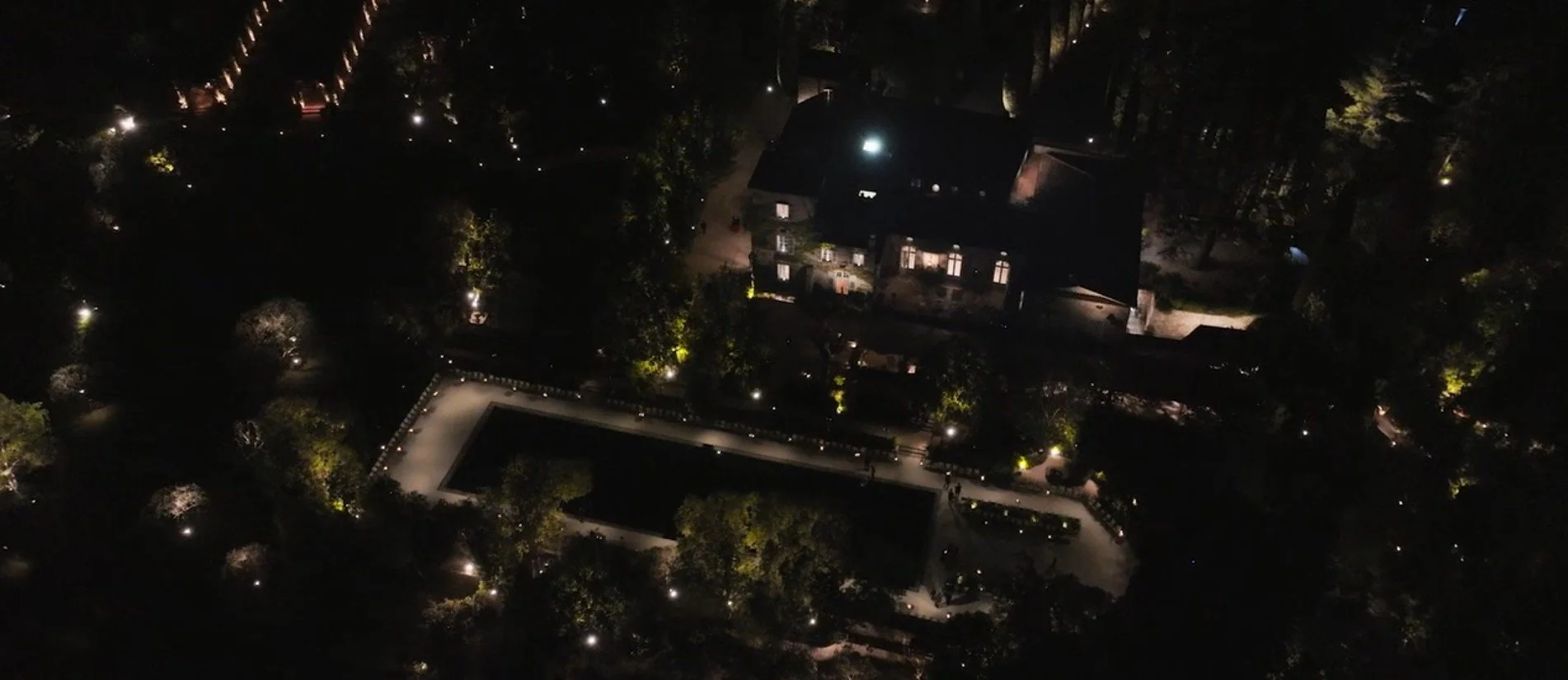
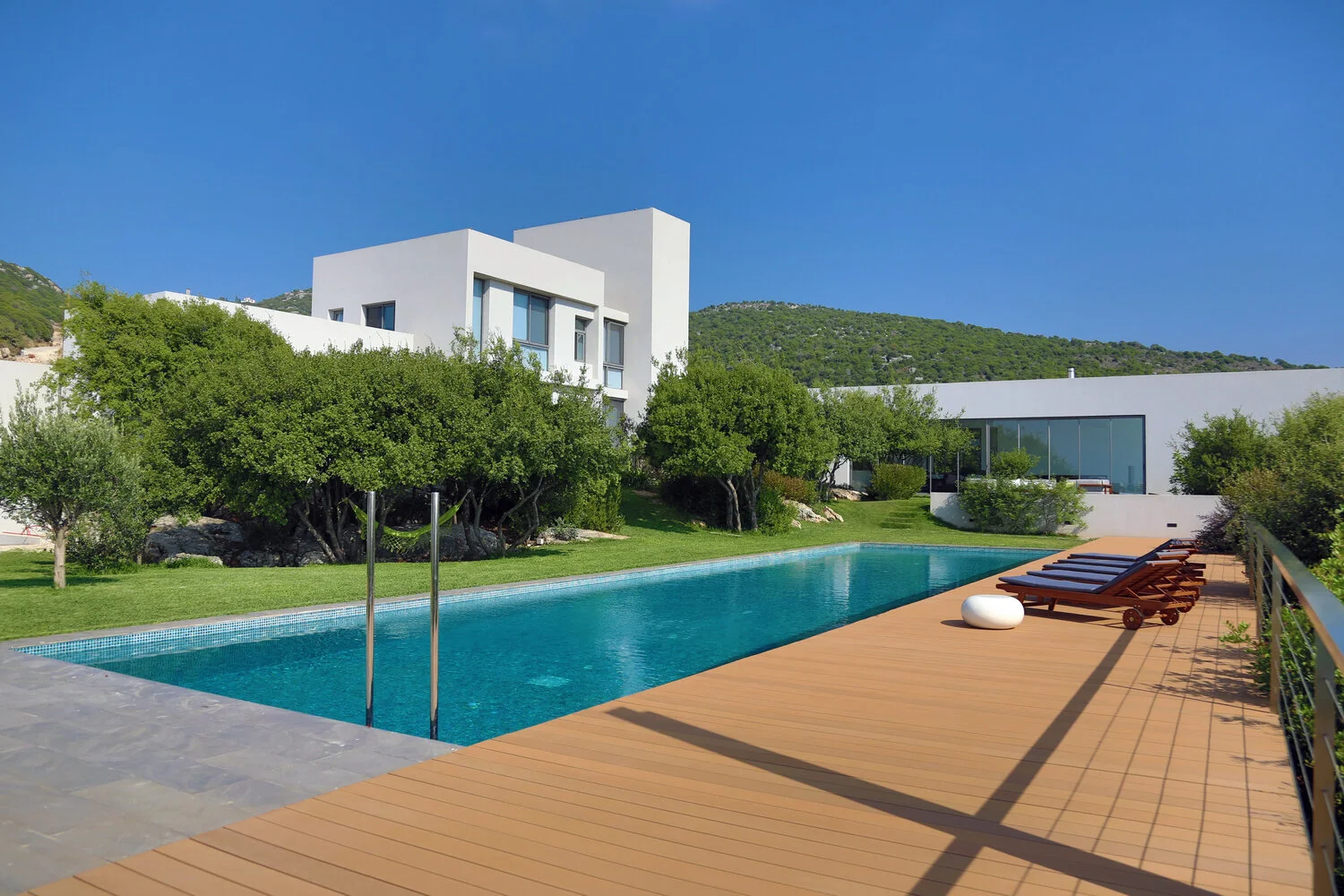
MITCH KAPOR, the software mogul and philanthropist, has given millions of dollars to environmental groups. Now Mr. Kapor wants to build a 10,000-square-foot house, complete with a 10-car garage, in Berkeley, Calif.When the house won planning approval earlier this year, many neighbors were surprised — not so much by the size of the house, or by its sleek design, but by the fact that, under Berkeley regulations, the house will qualify as “green.” In Berkeley, building proposals are evaluated on a “green point” scale, earning credit for such eco-conscious features as low-flow shower heads and insulation. A house with more than 60 points is labeled green, regardless of its size.

via Neighbors Oppose Green Label for the Software Mogul Mitch Kapor’s Big House – NYTimes.com.

On the one hand is the idea that we want all our structures to be green, even mansions, and that the world is made better by applying green principles to what many view as conspicuous consumption. Additionally, it is the wealthy who build big houses that are generally the early adopters of emerging technologies, green and otherwise. Wealthy buyers can participate when technology is in early development phases and still too expensive for the rest of us.

On the other hand is the idea that conspicuous consumption is a major part of our environmental problem in and of itself. We have a tendency to consume far more resources than we actually need to live comfortably. Our society promotes this by making conspicuous consumption the lifestyle to aspire to. Shows on the lifestyles of the rich and famous abound. We have an economy that lives and dies by our willingness to consume. Waste is rampant. Those who hold this point of view would prefer our empire builders to be more like Warren Buffet, who has amassed an enormous fortune and the power and influence that comes with it, but lives humbly.

My point of view is that living in balance or proportion is key. We have to strive for a natural efficiency where our consumption of resources is moderated by an understanding of the balance that humanity needs to strike with our home, planet earth. It is not that some of us should not have more. More is often earned with hard work and real talent. Even with truly level playing fields, someone will always be better, work harder and/or have more good fortune. It is that none of us should waste. None of us should have more space than we have actual use for. None of us should have more things than we have cause to pick up or appreciate, at least every once in a while.

Going deeper though, I think it is important to at least consider whether the materialist society we have built is the best we can do. Whether there isn’t another way of looking at work and consumption that has a greater potential for human happiness. We should at least consider the following critique that E. F. Schumacher had of our economic system:

In his essay entitled Buddhist Economics E. F. Schumacher wrote:

“Right Livelihood” is one of the requirements of the Buddha’s Noble Eightfold Path. It is clear, therefore, that there must be such a thing as Buddhist economics.

Buddhist countries have often stated that they wish to remain faithful to their heritage. So Burma: “The New Burma sees no conflict between religious values and economic progress. Spiritual health and material well-being are not enemies: they are natural allies.” 1 Or: “We can blend successfully the religious and spiritual values of our heritage with the benefits of modern technology.” 2 Or: “We Burmans have a sacred duty to conform both our dreams and our acts to our faith. This we shall ever do.” 3

All the same, such countries invariably assume that they can model their economic development plans in accordance with modern economics, and they call upon modern economists from so-called advanced countries to advise them, to formulate the policies to be pursued, and to construct the grand design for development, the Five-Year Plan or whatever it may be called. No one seems to think that a Buddhist way of life would call for Buddhist economics, just as the modern materialist way of life has brought forth modern economics.

and:

While the materialist is mainly interested in goods, the Buddhist is mainly interested in liberation. But Buddhism is “The Middle Way” and therefore in no way antagonistic to physical well-being. It is not wealth that stands in the way of liberation but the attachment to wealth; not the enjoyment of pleasurable things but the craving for them. The keynote of Buddhist economics, therefore, is simplicity and non-violence. From an economist’s point of view, the marvel of the Buddhist way of life is the utter rationality of its pattern—amazingly small means leading to extraordinarily satisfactory results.

For the modern economist this is very difficult to understand. He is used to measuring the “standard of living” by the amount of annual consumption, assuming all the time that a man who consumes more is “better off” than a man who consumes less. A Buddhist economist would consider this approach excessively irrational: since consumption is merely a means to human well-being, the aim should be to obtain the maximum of well-being with the minimum of consumption. Thus, if the purpose of clothing is a certain amount of temperature comfort and an attractive appearance, the task is to attain this purpose with the smallest possible effort, that is, with the smallest annual destruction of cloth and with the help of designs that involve the smallest possible input of toil. The less toil there is, the more time and strength is left for artistic creativity. It would be highly uneconomic, for instance, to go in for complicated tailoring, like the modern West, when a much more beautiful effect can be achieved by the skillful draping of uncut material. It would be the height of folly to make material so that it should wear out quickly and the height of barbarity to make anything ugly, shabby, or mean. What has just been said about clothing applies equally to all other human requirements. The ownership and the consumption of goods is a means to an end, and Buddhist economics is the systematic study of how to attain given ends with the minimum means.

To follow the path of Buddha here clearly would turn our economic system on its head. I have no idea how we could move our society from where it is to this place. I do, however, think that the ecological problems we are facing and the green movement that has sprung up to grapple with them may be creating the space where we can at least contemplate the path of Buddha in our economics.

This past week I encountered a small example of what this might look like. I have been working on helping churches with energy efficiency. In one church with a school building and a sanctuary that were separate buildings we noticed that the steam heating system was not zoned, that is, when the school was being heated, so was the sanctuary, and vice verse. So we thought we should install a couple of motorized valves that could be controlled by a programmable thermostat in each of the buildings and in this way the system would be zoned.

I called in three highly recommended steam boiler mechanics to give me pricing on the modifications needed. Meetings with the first two revealed that it would only be feasible in any cost effective way to zone the sanctuary separately. That is, we could make it so that the school could be heated without heating the sanctuary but not vice verse. But since the principle issue was that the sanctuary was being heated all the time, but pretty much used only on Sunday, we felt zoning the sanctuary off would be good enough. So, in the end, we would only partly accomplish what we set out to do, but we could do it with the insertion of a couple of valves.

Something all together different happened when I met with the third mechanic. I described to him what we were trying to do and how we had determined we should do it. He walked around and looked the system over carefully and then told me we had no need to install new valves. By opening and closing valves that were already there, we could effectively heat the school from one boiler and the sanctuary from the other. All we would need to do was reconfigure the thermostatic controls.

Now everyone who looked at this boiler set up, with the exception of me, knew a lot about what they were looking at and were good competent people. But there was only one individual that was able to understand the goal of the project and have the freedom of mind to look carefully at the givens and find a better way. His way will cost $2,500 or less, as opposed to the $10,000 to $15,000 the other way would cost. His way would take us all the way to our goal as opposed to only most of the way. His way will make his company less money in the short term, but has insured that I will go back to him whenever I have a steam boiler system to be assessed and modified. His way is the way of Buddha, least effort and consumption, maximum happiness. It is also the way of a market economy that exchanges goods and services for monetary gain. In his way lies the germ, I think, of how our consumer economy can learn the way of Buddha without completely abandoning its own best qualities.

We need to embrace an ethos of minimum effort and consumption to achieve maximum happiness. As E. F. Schumacher points out, maximum consumption, usually acquired and maintained with great effort, is the path we generally attempt to follow to happiness. The happiness we achieve in this way is neither maximum nor lasting.

Bookmark and Share

Leave a Reply

You must be logged in to post a comment.